

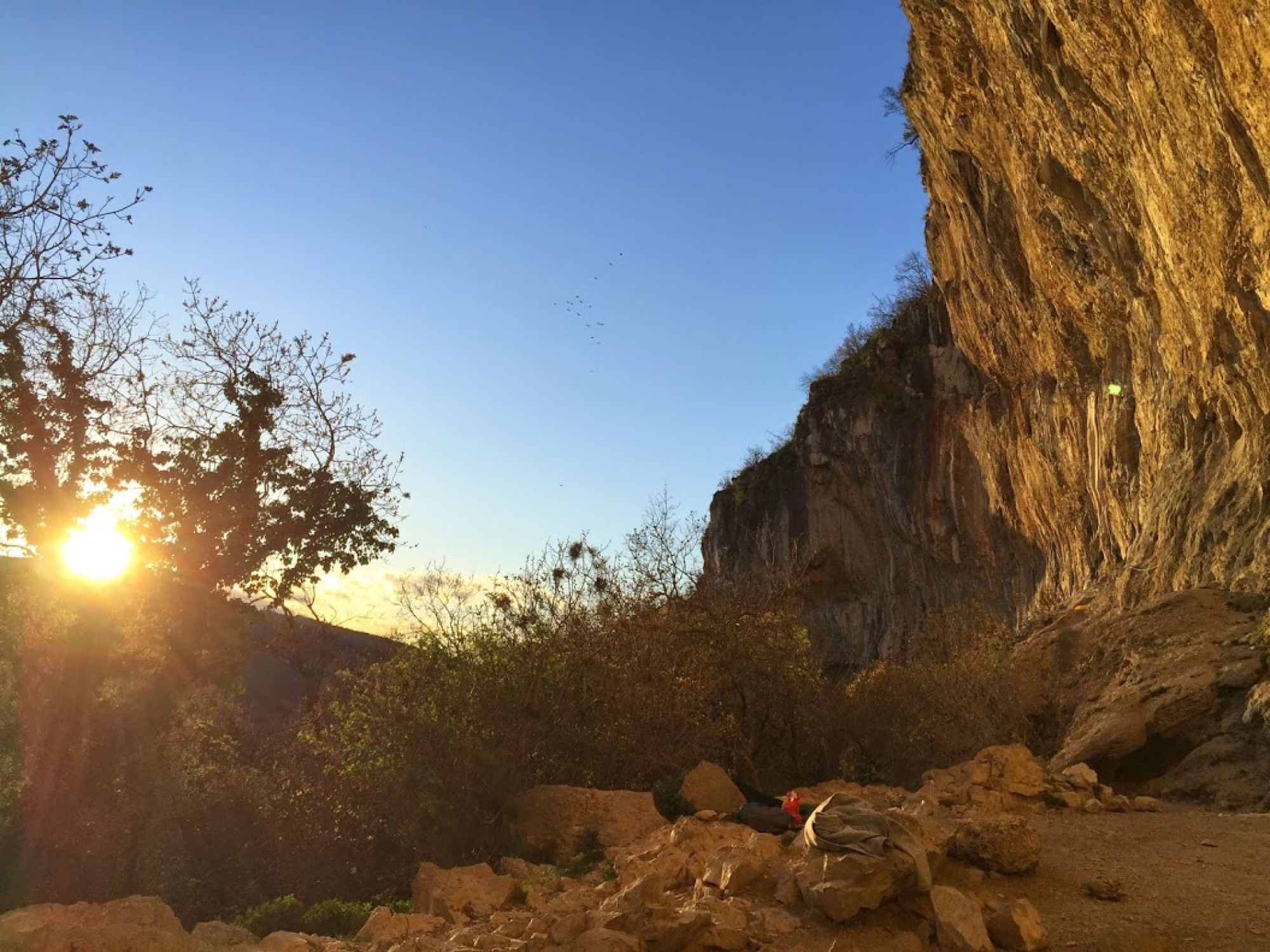
Some big sends from February
February brought an impressive list of ascents across Istria, with strong performances in Mišja peč and Kompanj.
In the central part of Mišja peč, Martin Bergant climbed two of the crag’s long and sustained testpieces: Corrida (8c) and Pikova dama (8b). His girlfriend Lana Skušek was equally successful, sending the beautiful endurance line Sreča vrtnice (8b) and also ticking the powerful, bouldery Iglu (8a).
Matija Zupan achieved a personal milestone by redpointing his hardest route to date, the classic power endurance challenge Missing link (8b+), located in the right sector of Mišja peč known as “the freezer”.
Another strong ascent came from Tim Korošec, who climbed the iconic Mišja peč line Mrtvaški ples (8b). Meanwhile, Nina Landekar sent the intense and powerful Giljotina (8a).
International climbers were also active. Wojtek Michlewski from Poland climbed the chipped forearms resistance test Marioneta (8b/b+), adding another strong ascent to his visit.
Further south in Croatian Istria, Ajda Remškar visited Kompanj, where she successfully climbed the short but powerful Rocket Max (8a+/b).
Important February safety and access reminders
While February offers excellent climbing, it is important to remain aware of safety and access issues:
- Mišja peč parking car break-ins: https://climbistria.com/parking/
- Access issues in Kompanj: https://climbistria.com/safety-warning-kompanj/
Please respect local rules and take precautions to ensure continued access to these world-class climbing areas.
Early March weather forecast and climbing conditions in Istria
As February transitions into early March, climbing conditions in Istria and the surrounding crags remain generally favorable, although the weather becomes slightly more variable with the arrival of spring.
Typical early March temperatures in Istria reach around 10°C to 14°C during the day, while nights remain cool, often dropping to around 4°C. These temperatures still provide excellent friction on limestone, especially during sunny periods. ()
The current early March forecast indicates a mix of stable dry days and occasional rain periods. This variability is normal for March, which marks the transition from winter to spring. Climbers can expect:
- Cool to mild daytime temperatures ideal for performance climbing
- Alternating sunny and cloudy days
- Occasional rainfall and short unstable periods
- Increasing daylight hours allowing longer climbing sessions
March typically brings moderate rainfall and around 12 rainy days throughout the month, but also many dry climbing days with good friction and pleasant temperatures.
Compared to February, March offers slightly warmer temperatures and longer days, making it a comfortable period for climbing both endurance routes and shorter power lines. However, climbers should monitor daily forecasts and plan climbing sessions around dry weather windows.
You can follow the latest detailed forecast here!
Overall, early March continues to offer very good climbing conditions in Istria, especially on dry days with sun and light wind.